


Top 10 early season ski resorts – Europe
Updated: 9 October 2026
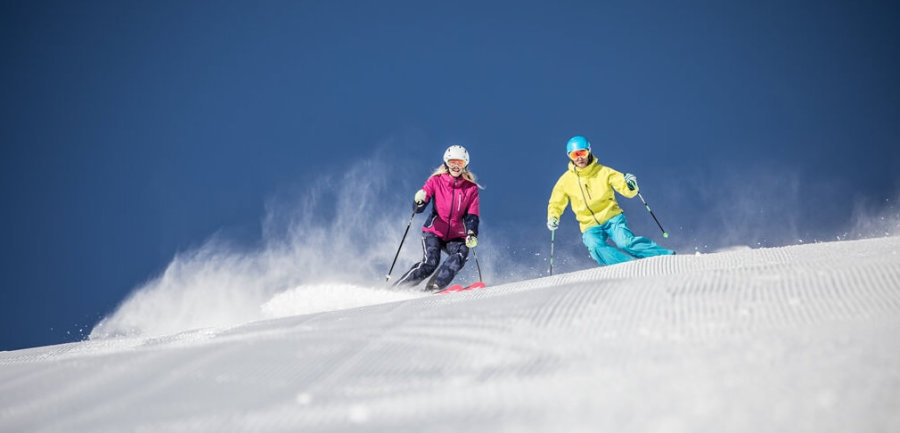
Early season skiing (and by that we mean pre-Christmas) can be immensely rewarding. For many it’s simply the anticipation and excitement of getting back on the slopes. For others it’s the lack of crowds and low prices.
But what about the snow? Just how risky is it booking up in advance for the very beginning of the season? Which are the most reliable European ski resorts for a pre-Christmas break? And is a resort that opens in October necessarily a good choice for an early-season ski holiday?
Nowhere is guaranteed good early snow, of course, but by choosing your resort carefully you can certainly mitigate the risks.
Early-season snow reliability and snow conditions are about more than simply choosing the highest resort. Altitude, aspect, type of terrain, local weather patterns, glacier access and snowmaking all play a part, as does how much of its ski area a resort is prepared to open early in the season when conditions allow.
With that in mind, here are 10 of the best early-season ski resorts in the Alps for a combination of snow reliability, snow conditions and likely extent of open terrain at different stages of the early season – in no particular order...
1. Val d'Isère/Tignes, France
|
Resort height: |
1850/2100m |
|
Slopes: |
1550-3455m (Tignes–Val d'Isère) |
|
Pistes:
Usual opening: |
300km (Tignes–Val d'Isère)
Late November (Tignes can open a little earlier than the combined ski area)
|
|
2026/27 season:
|
Tignes: open from 21 November 2026 Tignes–Val d'Isère: from 28 November 2026 |
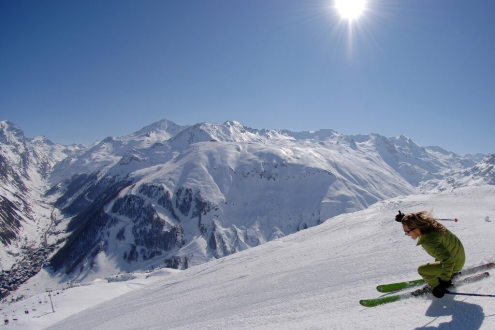 Photo: Agence Nuts - Val d'Isère Tourist Office
Val d'Isère and Tignes are arguably the best bet in the Alps for an early season ski break, and should certainly be on everyone's shortlist.
Yes, there are other ski resorts equally likely to have snow but, unlike many resorts which wait until the crowds arrive at Christmas, few areas are as dedicated as Tignes–Val d'Isère (the combined ski area of both resorts, formerly known as L'Espace Killy) when it comes to opening up as much as possible as early as possible. The area will endeavour to open up most of its terrain early if conditions allow - which they often do.
Even if it hasn't snowed, there is some serious snowmaking here - especially on the Val d'Isère side, which now boasts one of the largest man-made snow systems in Europe.
Add to the mix not one but two skiable glaciers (the best of which is the Grande Motte above Tignes) and it's easy to see why Val d'Isère and Tignes are considered among the best early season ski resorts. Some action is pretty much guaranteed.
For anyone planning a proper early season ski holiday, rather than simply a few turns on a glacier, Tignes–Val d'Isère is a particularly strong choice from late November onwards. The extent of skiing available will still depend on conditions, but few Alpine ski areas are as committed to opening substantial terrain well before Christmas.
2. Cervinia, Italy
|
Resort height: |
2050m |
|
|
Slopes: |
1525-3480m |
(1525-3820m inc Zermatt) |
|
Pistes: |
150km |
(350km inc. Zermatt) |
|
Usual opening: |
Late October |
|
|
2026/27 season: |
Open from 24 October 2026 |
|
 Photo: Cervino SpA
Cervinia's height normally allows it to open in late October, with skiing guaranteed on the glacier (shared with Zermatt) if there hasn't been much early snow.
You are unlikely to be able to ski back to resort immediately, though in some years you can ski down to one of the the mid-stations, be it to Laghi Cime Bianche (2810m) or, if you are very lucky, to Plan Maison (2555m).
Whatever the case, Cervinia does its best to extend the available terrain as far as possible down the mountain as winter approaches, so that by late November you can sometimes ski all the way back to base. Once any serious snow has fallen, it is likely to stick around due to the ski area's exceptional height.
By December, snow cover is often complete - making Cervinia one of the most reliable early season ski resorts in the Alps. Don't forget that (weather-permitting) you can also ski over to Zermatt, across the border in Switzerland (the combined ski area of both resorts known as the 'Matterhorn Ski Paradise'), where the first area you will arrive at is its super snow-sure, largely glacial Klein Matterhorn sector.
Cervinia is therefore an excellent option for anyone keen to ski as early as October, provided they are happy with potentially limited terrain. For a more complete ski holiday, late November and especially December are generally better bets, when more of the mountain is likely to be open.
3. Hintertux, Austria
|
Resort height: |
1500m |
|
Slopes: |
1500-3250m |
|
Pistes:
Usual opening: |
86km
Formerly 365 days a year Now takes a break typically from late July - late Sep
|
|
2026/27 season: |
Open from 2 October 2026 |
 Photo: Hintertux Gletscher
If it's snow at all cost you're after, then Hintertux is probably the most reliable ski resort in the Alps.
The glacier here (arguably the best in the Alps) was until recently famous for being open 365 days a year. However, in 2025 Hintertux abandoned year-round skiing and now takes a summer break, typically from late July until late September. Its lower non-glacial areas are both high (by Austrian standards) and shady.
Hintertux is probably also the safest bet for an early season ski break, if you can handle the limited extent of the skiing. Granted, the extent of terrain can't compare to the likes of Val d'Isère or Ischgl, but there is more variety and challenge than you might think. This is especially true if the lower non-glacial section of the resort is open – this can be in early November in a good year but is more typically in late November/early December.
If the snow is good, nearby Mayrhofen (open late November) will greatly increase your options.
Hintertux is therefore an excellent choice for anyone wanting to ski in October or early November, when most Alpine resorts are still closed. However, if you are looking for a more extensive ski holiday later in the autumn, it may be worth waiting until the lower slopes open or considering one of the larger resorts that open towards the end of November.
4. Ischgl, Austria
|
Resort height: |
1400m |
|
Slopes: |
1400-2870m |
|
Pistes:
Usual opening: |
239km
Late November |
|
2026/27 season: |
Open from 26 November 2026 |
 Photo: Tourismusverband Paznaun-Ischgl
Ischgl opens towards the end of November and, despite its lack of glacier, usually offers the greatest extent of early season skiing in Austria, sometimes even the Alps.
There are two main reasons for this. The first is good snow-making – with around 60% of the 238km of pistes covered, including all the main arteries and routes down to resort.
Even more important though is the area’s height and orientation. Ischgl has far more skiing above 2000m than any other resort in Austria, much of it facing north or north-west - meaning that once an early base is laid down, it tends to stick. What's more, unlike many other resorts, Ischgl will always make the maximum effort to open as many pistes as possible given the snow conditions at the time.
Ischgl is therefore one of the best options for anyone planning a proper ski holiday in late November or early December, rather than simply looking for the earliest possible skiing. While it opens later than the glacier resorts, it will often have considerably more terrain available from the outset, making it particularly attractive for skiers who want plenty of variety before Christmas.
5. Obergurgl, Austria
|
Resort height: |
1930m |
|
Slopes: |
1795-3080m |
|
Pistes:
Usual opening: |
110km
Mid to late November |
|
2026/27 season: |
Open from 19 November 2026 |
 Photo: Alexander Maria Lohmann
With a resort height of 1930m and slopes topping 3000m, Obergurgl is probably the most snow-sure entirely non-glacial resort in the Alps, and is an excellent early season choice if you don't mind its relatively limited terrain.
Ischgl may have a larger ski area, but Obergurgl has the distinct advantage of offering the more reliable resort level snow. Claiming 90% artificial snow coverage, the resort is usually up and running by mid-November.
Nearby Sölden's two glaciers give you further options in the unlikely event that local conditions aren't up to scratch.
For a ski holiday in late November or early December, Obergurgl is therefore a particularly attractive option if snow reliability is more important to you than the sheer extent of the skiing available. Its exceptionally high resort altitude also gives it a better chance of offering a wintry atmosphere and natural snow at resort level, although skiing back to resort is virtually assured early in the season thanks to extensive snowmaking.

6. Val Thorens, France
|
Resort height: |
2300m |
|
|
Slopes: |
1800-3230m |
(1260-3230m - 3 Valleys) |
|
Pistes: |
150km |
(600km - 3 Valleys) |
|
Usual opening: |
Mid to late November |
|
|
2026/27 season: |
Val Thorens: open 21 November 2026 3 Valleys: open from 5 December 2026
|
|

Europe's highest ski resort, Val Thorens, normally opens earlier than most of its main early season rivals, including the combined Tignes–Val d'Isère ski area.
Thanks to the resort's altitude and state-of-the-art snow-making, snow cover on piste is normally assured from late November, although snow conditions can be more hit and miss off-piste.
The available terrain is usually less extensive than in Tignes–Val d'Isère – at least until the rest of the 3 Valleys open up in early to mid-December – but Val Thorens does have the distinct advantage of being more compact, as well as offering more reliable resort level snow.
Val Thorens is just one resort of the vast 3 Valleys ski network, which also includes Les Menuires, St Martin de Belleville, Méribel, La Tania and Courchevel. Of these, Courchevel is another safe early season option - if you can hang on until early December - not least due to its immaculate grooming and piste maintenance.
Val Thorens is therefore a particularly strong choice for a ski holiday in late November, when its high altitude and reliable piste coverage are major advantages. However, anyone hoping to explore the wider 3 Valleys should ideally wait until December. For winter 2026/27, Val Thorens is scheduled to open on 21 November, with the linked 3 Valleys ski area following on 5 December, subject to conditions.
7. Sölden, Austria
|
Resort height: |
1380m |
|
Slopes: |
1350-3250m |
|
Pistes:
Usual opening: |
150km
Late September |
|
2026/27 season: |
Glacier open from 9 October 2026 Winter ski area open from 12 November 2026 |
 Photo: Ötztal Tourismus
Sölden may not boast the highest natural snowfall, but it does have two excellent glaciers, which normally allow skiing to begin in late September or October, making it one of the best resorts in the Alps for a very early ski break. For 2026/27, glacier skiing begins on 9 October, initially with very limited terrain.
Additional slopes may also open early depending on conditions, though you normally have to wait until mid to late November before any significant non-glacial terrain becomes operational.
By early December, however, you can almost guarantee the majority of this high-altitude Austrian ski area being open – as well as being able to ski back to resort.
8. Zermatt, Switzerland
|
Resort height: |
1620m |
|
|
Slopes: |
1620-3820m |
(1525-3820 incl. Cervinia) |
|
Pistes: |
200km |
(350km incl. Cervinia) |
|
Usual opening: |
Main ski area: from mid-November Klein Matterhorn glacier: all year round |
|
|
2026/27 season: |
Main ski area: 1 November 2026 (subject to conditions) Theodul glacier skiing: suspended from 1 August 2026 |
|
 Photo: weathertoski.co.uk
Zermatt may have a relatively dry climate but, with both a large glacier and the highest pistes in the Alps, its snow preservation is excellent. Its Klein Matterhorn glacier normally allows skiing all year round, although in 2026/27 public summer skiing on the Theodul glacier was temporarily suspended from 1 August 2026 because of exceptionally warm weather and poor glacier conditions.
Other non-glacial parts of the ski area normally open later in November, as conditions allow. For 2026/27, the Gornergrat and Sunnegga–Rothorn sectors are scheduled to open on 28 November.
The extent of early skiing available in Zermatt is dictated by snow conditions, but by early December there is normally a good network of pistes open linking all three of the resort's main areas.
Don't forget that (weather-permitting) you can also ski into neighbouring Cervinia, across the border in Italy, which has its own extensive and snow-sure ski area, open from late October.
9. Obertauern, Austria
|
Resort height: |
1740m |
|
Slopes: |
1630-2315m |
|
Pistes:
Usual opening: |
100km
Late November |
|
2026/27 season: |
Main opening: 27 November 2026 Partial opening: from 20 November 2026 (subject to conditions) |
 Photo: Tourismusverband Obertauern
Obertauern does not have a glacier to fall back on, but its impressive natural snowfall and comprehensive snow-making usually mean that there is plenty of terrain open by the time the resort opens in late November. For 2026/27, the resort is scheduled to open on 20 November, with the full Tauernrunde ski circuit expected to follow on 27 November, snow conditions permitting.
The resort's geography is also a factor in helping to preserve the snow and its early season reliability. Its top height of 2315m is not spectacular but, situated on the eastern side of the Alps, average temperatures (relative to altitude) are considerably lower than in the western (and especially north-western) Alps, which are more exposed to the warming effects of the Atlantic gulf stream.
10. Les 2 Alpes, France
|
Resort height: |
1650m |
|
Slopes: |
1300-3570m |
|
Pistes:
Usual opening: |
205km
Late November
|
|
2026/27 season:
|
Open from 28 November 2026 |
 Photo: Office de Tourisme des 2 Alpes / Laurent Salino
Les 2 Alpes used to open its glacier area for the autumn half term (in late October) before closing again in November, and re-opening "properly" in early December. However, autumn glacier skiing has become increasingly difficult in recent years and is no longer part of the resort's regular opening programme. The ski area is due to open for the 2026/27 winter season on 28 November 2026.
Whilst complete early December snow cover is not guaranteed, the resort boasts the largest skiable glacier in Europe and the highest pistes in France. Its upper slopes are likely to have good conditions, especially on the glacier, which is one of the best in the Alps. What's more, most of the upper runs face north, helping to preserve whatever early snow has fallen, even if it takes a while to get up to it.
Lower down, early season conditions are more temperamental (particularly on the steeper west-facing home runs), but they do have snow-making and, if you are very lucky, you can enjoy one of the longest vertical drops in the Alps.
Which resort should you choose for skiing in October, November or early December?
October: Hintertux and Sölden are two of the obvious choices for very early skiing, with Cervinia becoming an option later in the month. However, skiing may be restricted to relatively limited high-altitude terrain. These are generally better options for locals, race training or mad-keen skiers desperate to get back on snow than for anyone expecting a normal full week's varied ski holiday.
November: While terrain is normally still limited in early November, mid to late November is when the prospects of a proper ski holiday in the Alps become much more interesting. Tignes–Val d'Isère, Val Thorens and Ischgl all stand out as ski resorts that make a considerable effort to open substantial amounts of terrain early in the season.
Obergurgl and Obertauern are also attractive options, particularly given their chances of having good snow cover at resort level. And, while the resorts of the Dolomites aren’t featured in our “Top 10” list of early ski resorts in Europe, they are also worth considering from late November onwards. Their world-class snowmaking and piste management have historically allowed extensive areas to open by early December, even when natural snowfall has been limited.
December: By early December, the number of good options for skiing in the Alps becomes considerably wider. While Cervinia, Zermatt and Les 2 Alpes offer exceptionally high-altitude skiing, Tignes–Val d'Isère, Ischgl and many resorts in the Dolomites remain particularly strong contenders if your priority is the extent of open terrain. By this point in the season, the distinction between glacier and non-glacier resorts is less important than the actual snow conditions and how much terrain is open.
In short, when considering an early-season ski holiday, the resort that opens earliest isn't necessarily the best place to book. Some glaciers may offer skiing in October, but resorts opening in late November can provide far more extensive and varied terrain almost immediately. Equally, the highest ski resorts don’t always offer the most extensive skiing. And lower ski resorts, with favourable geography, excellent snowmaking or a committed approach to opening terrain early can prove surprisingly reliable.
There are never any guarantees, especially when booking well in advance, but choosing your resort carefully can considerably improve your odds of enjoying good early-season skiing!
If you enjoy reading our content - feel free to support us:
See our latest update on weather and snow conditions in the Alps
For more on how early-season snow conditions vary
from September through to December, see our
 Print